
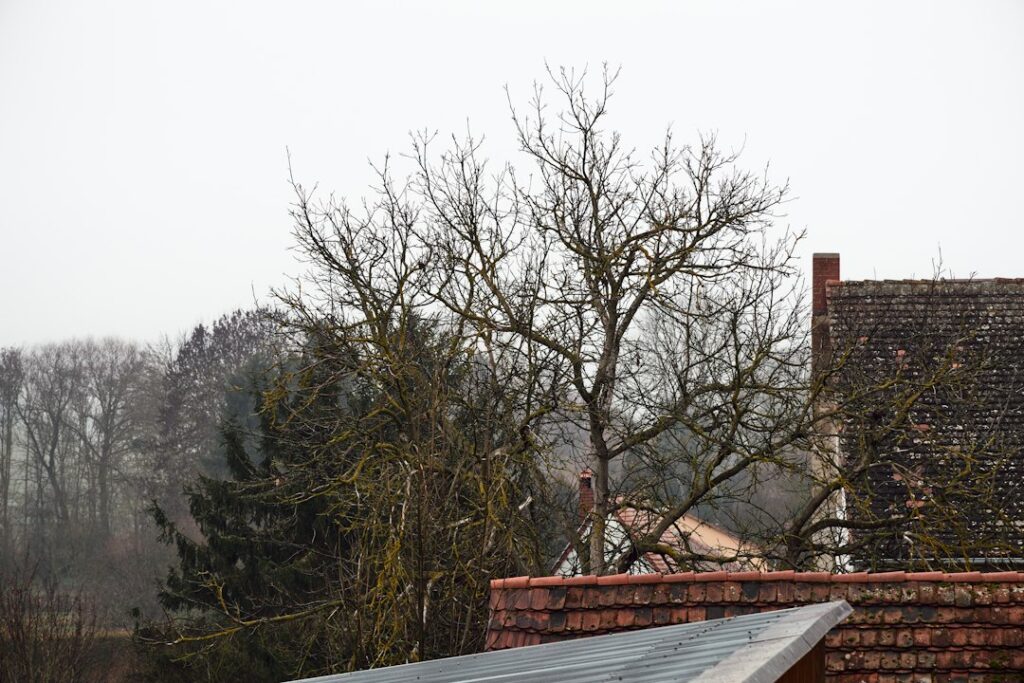
How can tree limbs affect a roof?
Tree limbs can damage roofing in several ways, including breaking shingles, puncturing roof coverings, clogging gutters, scraping protective surfaces, and creating paths for water to enter. Damage may happen during a major storm, but smaller problems can also develop gradually as branches rub against the roof or remain damp against roofing materials.
For households in Delhi, winter snow, ice, freezing temperatures, and strong winds can increase the strain on trees near a home. A branch that appears stable in mild weather may become hazardous after accumulating snow or ice.
What types of roof damage can falling branches cause?
The severity depends on the branch’s size, its height, the roof material, and where it lands. Common forms of damage include:
- Broken or displaced shingles: A falling limb can crack asphalt shingles, knock them loose, or expose the underlayment beneath them.
- Punctures: Large or sharp branches may break through shingles, roofing boards, or even interior ceilings.
- Damaged flashing: Metal flashing around chimneys, roof edges, vents, and wall intersections can bend or separate.
- Gutter and downspout damage: Limbs may tear gutters away from the roofline or block the flow of rainwater.
- Structural damage: A heavy tree section can damage roof decking, rafters, trusses, or exterior walls.
- Water intrusion: Even a small opening can allow rain or melting snow to reach insulation, framing, and finished ceilings.
A branch does not need to make a visible hole to cause trouble. Cracked shingles, lifted edges, and bent flashing may allow water in during the next storm.
Can branches damage a roof without falling?
Yes. Branches that rest on or repeatedly rub against a roof can wear away the protective surface of shingles. Movement from wind may scrape off the granules that help shield asphalt shingles from sunlight and weather. Over time, the affected area may become thinner, rougher, or more vulnerable to cracking.
Low branches can also keep portions of the roof shaded and damp. That moisture may encourage moss or algae growth, especially on roof sections that receive limited sunlight. Moss can hold moisture against roofing materials and may lift shingle edges as it grows.
Branches touching the roof can also make it harder to see existing problems. Leaves, twigs, and needles may collect around valleys, vents, skylights, or chimney areas, where water needs to drain freely.
Why are gutters part of the problem?
Tree debris commonly reaches the roof and gutters before it reaches the ground. Leaves, small twigs, seed pods, and needles can collect in gutters and restrict water flow. During heavy rain, blocked gutters may overflow against fascia boards, siding, windows, or foundation areas.
In cold weather, wet debris can freeze into dense masses. Repeated freezing and thawing may increase the weight carried by gutters and contribute to sagging or separation from the roof edge. Ice buildup near the eaves can also worsen drainage problems.
A roof may appear intact while clogged drainage causes concealed moisture damage along the roof edge. Checking gutters after windy weather and during the fall leaf season can help identify problems before they become more extensive.
Which tree conditions create the greatest risk?
The greatest risk usually comes from trees or limbs that are dead, cracked, diseased, leaning, or growing unusually close to the structure. Warning signs include:
- Dead branches that remain attached
- Cracks where limbs connect to the trunk
- Hanging or partially broken branches
- Loose bark, cavities, or visible decay
- Mushrooms growing near the trunk base
- Branches resting directly on shingles
- Trees leaning toward the home or changing position after storms
- Large limbs extending over the roof
Snow and ice deserve special attention in this area. A healthy branch can become heavily loaded when precipitation freezes onto its surface. Multiple smaller branches may also bend together and place pressure on the roof or nearby utility lines.
Pruning is safest when it does not involve climbing onto the roof, cutting near electrical lines, or handling heavy suspended limbs. Hazardous branches can shift unexpectedly, even in calm weather.
How can a homeowner inspect for damage safely?
A ground-level inspection is often enough to identify obvious concerns. Look for missing shingles, dark or wet areas, displaced metal, sagging gutters, fallen debris, and branches resting on the roof.
From inside the attic or upper rooms, check for:
- Damp insulation
- Water stains or discoloration
- Dripping after rain
- Musty odors
- Daylight visible through the roof decking
- Soft or deteriorated wood

Water may not appear directly below the damaged area. Roof leaks can travel along decking, rafters, insulation, or wall cavities before becoming visible indoors.
Avoid walking on a roof that may be wet, icy, unstable, or damaged. Do not climb onto the roof to remove a branch, particularly after a storm. A limb may be under tension, and disturbing it can cause it to roll or fall.
What should happen after a tree limb strikes the roof?
First, keep people away from the affected area and look for immediate hazards such as downed electrical lines, unstable branches, exposed wiring, or structural sagging. If water is entering, place containers beneath active drips only if doing so does not require entering an unsafe area.
Photographs taken from the ground can document the condition before debris is moved. It is also useful to record the approximate time of the event and whether wind, snow, or ice was involved.
Temporary protection may be appropriate in a minor, accessible situation, but tarps and other coverings can be dangerous to install on a damaged or slippery roof. A serious impact, visible structural damage, or an active leak generally requires evaluation by a qualified roofing or tree-care professional. Electrical hazards should be handled by the appropriate utility or electrical authority rather than by a homeowner.
Are small branches worth removing?
Yes. Small branches can still scratch shingles, block drainage, and accumulate into larger debris problems. Removing or trimming branches before they contact the roof is generally easier and safer than dealing with damage afterward.
Branches should not be cut simply because they are nearby. Improper pruning can weaken a tree, encourage decay, or cause future growth to rub against the roof. The goal is to maintain adequate clearance while preserving the tree’s health and stability.
Homes surrounded by mature trees benefit from periodic observation, especially before winter, during leaf fall, and after high-wind events. A quick check from the ground can reveal changes such as new deadwood, leaning limbs, or branches that have begun touching the roof.
How can tree-related roof damage be reduced?
Risk can be lowered through routine maintenance rather than emergency action. Useful precautions include:
- Keep branches from resting on or scraping the roof.
- Remove dead, cracked, or weakened limbs before severe weather.
- Keep gutters and roof valleys clear of accumulated debris.
- Inspect flashing, shingles, vents, and roof edges after major storms.
- Watch trees closely after heavy snow or ice accumulation.
- Keep ladders and pruning tools away from overhead utility lines.
- Do not assume that a tree is safe simply because it has stood near the house for many years.
Trees provide shade, wildlife habitat, and protection from wind, so removal is not automatically the answer. The practical objective is to manage clearance and identify hazards while preserving healthy vegetation whenever conditions allow.
