
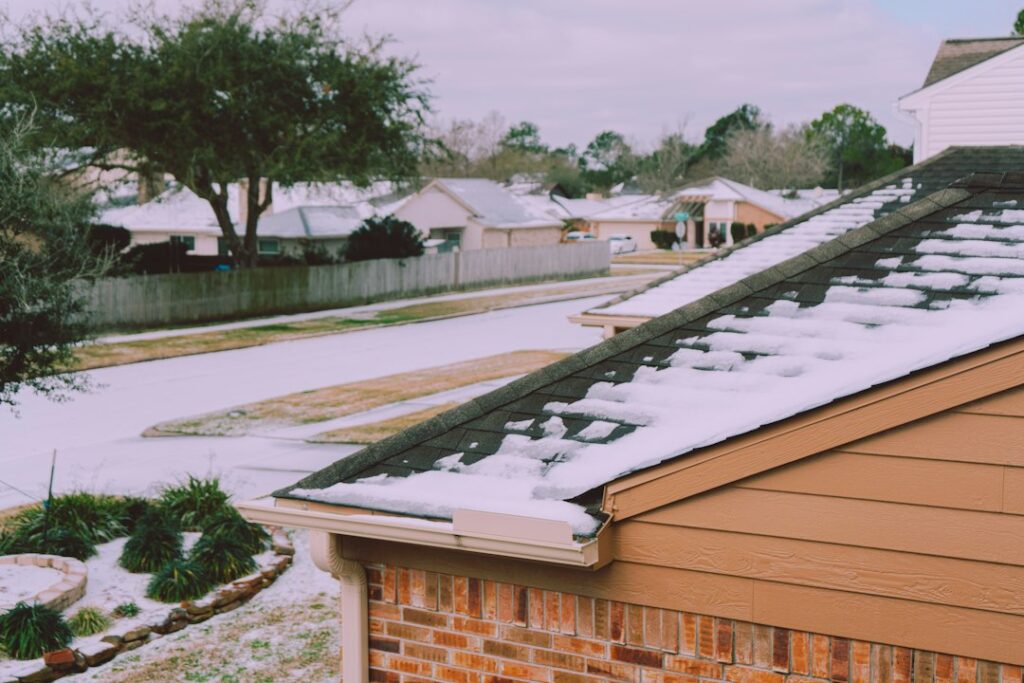
Why should a roof be prepared before winter?
Preparing a roof before winter helps reduce leaks, ice-related damage, heat loss, and emergency repairs during snow and freezing weather. In Delhi, NY, roofs may face repeated freeze-thaw cycles, heavy snow, wind, ice buildup, and falling branches, so preparation should begin before the first major storm.
A winter roof check is not only about the shingles. The roof system also includes flashing, gutters, ventilation, insulation, attic areas, chimneys, skylights, and the edges where water can enter the home.
What should be inspected before the first snowfall?
A roof inspection should look for signs that small problems could become larger during freezing weather. From the ground, residents can check for:
- Missing, cracked, curled, or visibly damaged shingles
- Dark areas or exposed underlayment
- Sagging sections along the roofline
- Loose metal flashing around chimneys, vents, and roof edges
- Damaged or displaced gutters
- Branches resting on or hanging over the roof
- Moss or heavy organic buildup that may hold moisture
- Granules collecting in downspouts or near foundation drains
Some defects are easier to see from a ladder or roof surface, but climbing onto a roof becomes particularly hazardous when surfaces are damp, icy, or covered with frost. A ground-level inspection is useful for routine awareness, while steep roofs, fragile roofing materials, and visible structural concerns require extra caution.
A roof does not need to look severely damaged to have a problem. Small openings around flashing or pipe penetrations can allow water into the attic, where the first signs may be damp insulation, stained wood, or a musty odor rather than a ceiling stain.
How should gutters and downspouts be prepared?
Gutters should be cleared of leaves, pine needles, roof granules, and other debris before freezing temperatures arrive. Blocked gutters can cause water to back up beneath roof edges or freeze into heavy formations that pull gutters away from the house.
Downspouts should discharge water far enough away from the foundation to prevent repeated pooling near the basement or crawl space. Check that each section is firmly connected and that water can flow freely through the outlet.
In colder weather, ice can form where gutters remain shaded or where warm roof areas release meltwater onto colder edges. Gutters are not designed to support large, uneven ice loads. Keeping them clear does not eliminate ice dams, but it helps prevent drainage problems from adding to the damage.
Do not use sharp tools, salt, or open flame on roofing materials or gutters. These methods can damage protective surfaces, corrode metal, or create a serious safety hazard.
What causes ice dams, and how can they be reduced?
Ice dams form when heat escapes into the attic and warms parts of the roof, causing snow to melt. The water then runs toward colder eaves, where it refreezes. As the ice grows, meltwater may back up beneath shingles and enter the attic or walls.
The most effective long-term approach is to keep the roof surface closer to a consistent outdoor temperature. That usually requires a combination of:
- Adequate attic insulation
- Air sealing around ceiling penetrations
- Clear soffit and ridge ventilation
- Properly functioning roof and gable vents
- Good air movement from the eaves toward the upper roof
Adding roof vents without addressing blocked soffit vents or air leakage may not solve the underlying problem. Likewise, removing attic insulation can make heat loss worse if it is not replaced with a properly designed system.
After a heavy snowfall, avoid using a shovel, axe, or other sharp tool on the roof. These can tear shingles and puncture membranes. Snow removal from a roof is also risky because falling snow and hidden ice can injure people below.
Should snow be removed from a residential roof?
Not every roof requires routine snow removal. Many residential roofs are designed to carry ordinary seasonal snow loads, but risk depends on roof design, snow depth, wetness, drifting, age, structural condition, and previous damage.
Warning signs that deserve attention include:
- Visible sagging in the roofline or ceilings
- Doors or windows suddenly sticking
- Cracking sounds from the attic or upper floors
- New leaks after snowfall
- Large snow drifts concentrated on one section
- Snow sliding unexpectedly from a roof plane
- Gutters pulling away from the building

Never stand beneath an area where snow or ice may slide. Large roof avalanches can damage vehicles, landscaping, porches, and people. If snow removal becomes necessary, the method should be selected with the roof material and structure in mind, and unsafe roof access should be avoided.
How can attic conditions reveal roof problems?
The attic often shows roof trouble before the living space does. On a dry day before winter, look for wet insulation, water stains, rusty nails, mold-like growth, daylight around roof penetrations, or frost on the underside of the roof sheathing.
Frost in an attic usually indicates that warm, moist indoor air is reaching a cold roof surface. Common sources include bathroom fans that vent into the attic, unsealed wiring holes, recessed lights, attic hatches, and gaps around plumbing or heating equipment.
Bathroom and kitchen exhaust should vent outdoors rather than into the attic. Attic access panels should fit securely, and insulation should not block required ventilation openings at the eaves.
A moisture problem that appears only during cold weather can still cause long-term wood deterioration and mold growth. It should not be dismissed simply because the roof is not actively leaking.
What roof details need special attention?
Certain areas create a disproportionate share of winter leaks. Inspect the flashing around chimneys, skylights, dormers, valleys, plumbing vents, and wall intersections. These locations experience complex water flow and often collect snow or ice.
Chimney masonry should be checked for loose mortar, cracked joints, or damaged caps. A chimney that allows water into the attic or upper walls can suffer additional freeze-thaw damage during winter.
Skylights should be examined for cracked glazing, failed seals, damp interior trim, or staining. Plumbing vent boots can become brittle with age, allowing water to enter around the pipe.
Roof penetrations should not be covered casually with tape, tarps, or improvised materials. Temporary coverings may trap moisture or move in high winds. Any emergency covering must be secured safely and treated as temporary protection, not a permanent repair.
What should be done after a winter storm?
After strong wind, heavy snow, or freezing rain, inspect the roof from the ground when conditions are safe. Look for missing shingles, displaced metal, broken branches, sagging gutters, and new water stains indoors.
Inside the home, check attic areas, ceilings, upper walls, and around skylights or chimneys. A small drip can travel along framing before appearing far from the actual entry point.
Keep records of unusual changes, including the date of a leak, weather conditions, affected rooms, and photographs taken from a safe location. This information can help distinguish between condensation, ice-dam backup, flashing failure, and storm damage.
Winter preparation is most effective when it combines a sound roof surface, clear drainage, controlled attic airflow, and safe observation after storms. In a snowy, freeze-thaw climate, preventing moisture from entering the building is usually easier than repairing damage after repeated cycles of freezing and thawing.
